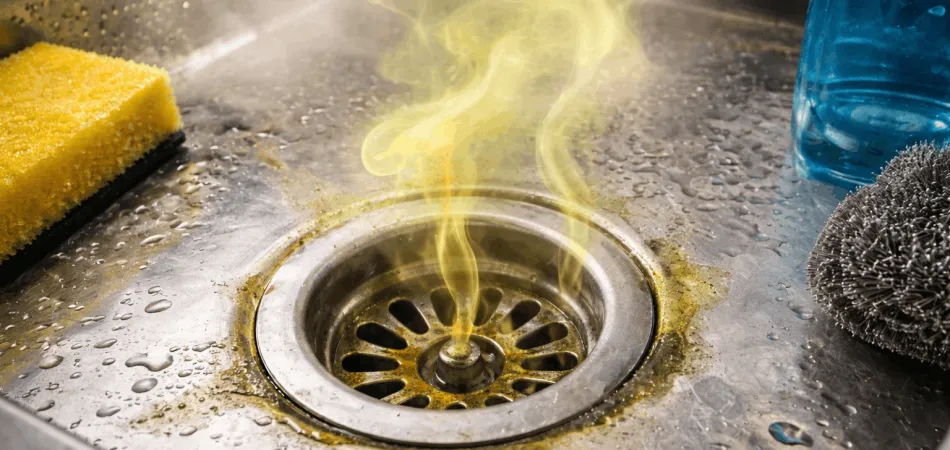
Why Does My Drain Smell? (And How to Fix It)
There's nothing quite like walking into your kitchen or bathroom and being hit with an unpleasant smell coming from the drain. It's not just off-putting — it can make your whole home feel dirty even when it isn't.
The good news is that in many cases, the fix is simple and inexpensive. With a few everyday household ingredients and some straightforward methods, you can often clear the smell without needing to call a plumber at all.
Here's a look at what causes smelly drains in the first place, followed by seven DIY methods that actually work.
Why Do Drains Smell?
Drain odours usually come from a build-up of organic material inside your pipes — things like food scraps, soap scum, grease, and hair. Over time, this material breaks down and the smell travels straight up through your sink, shower, or floor drain.
The type of smell can give you a clue about the cause. A rotten egg or sulphur smell is usually caused by bacteria. A musty or damp odour often points to mould or mildew. A sewage-like smell can suggest a deeper plumbing issue rather than just surface build-up.
In kitchens, grease and food scraps are the most common culprits. In bathrooms, it's usually soap build-up and hair. Either way, here are seven ways to deal with it.
Seven DIY Ways to Get Rid of Smelly Drains
One thing to note before you start — these methods are for odour only. If your drain is running slowly or you suspect a blockage, you'll likely need a different approach or help from a plumber.
Flushing with boiling water is often the simplest place to start. Boil a full kettle and pour it slowly down the drain in two or three stages. The heat helps break down greasy residue clinging to the pipe walls. If your pipes are PVC, use very hot tap water rather than a full boil to avoid any risk of damage.
Bicarb soda and white vinegar is a classic combination that works well for kitchen drains in particular. Pour half a cup of bicarb down the drain, follow with a cup of white vinegar, and let it fizz for 10 to 15 minutes before rinsing with hot water. The reaction helps neutralise odours and tackles some of the bacteria causing the smell.
Lemon juice is a good option if you want something that leaves a fresh scent rather than a vinegar smell. Squeeze one or two lemons directly into the drain, let it sit for around 10 minutes, then rinse with hot water. You can also drop in some lemon peel for extra effect.
Coarse salt and boiling water is a cheap and easy option, particularly for bathroom drains where soap scum and hair tend to trap moisture. Pour half a cup of coarse salt down the drain followed by boiling water, let it sit for a few minutes, then rinse through with tap water.
Enzyme-based drain cleaners are a good hands-off solution if you'd rather not mix things yourself. Available from most hardware stores, these products use natural bacteria to break down the organic matter causing the smell. Look for one without bleach, and follow the product instructions carefully, particularly around timing and rinsing.
Ice cubes and salt can help freshen up a smelly kitchen disposal unit if you have one. Drop a handful of ice cubes and coarse salt into the drain, run the disposal, then rinse with warm water. The ice and salt help scrape residue off the internal components.
Keeping drains dry between uses is a simple preventative habit that many people overlook. Moisture encourages the growth of mould and bacteria, so wiping around the drain and avoiding leaving wet sponges or cloths nearby can make a noticeable difference over time.
When the Smell Keeps Coming Back
If you've tried the methods above but the smell returns after a few days, the issue is likely more than just surface build-up. Persistent odours often point to a partial blockage sitting deeper in the pipes, where bacteria have a constant food source and the usual DIY fixes can't reach.
Recurring smells can also come from a dried-out P-trap — particularly in bathrooms or laundries that don't get used very often. The P-trap is the curved section of pipe beneath the drain that holds a small amount of water to block sewer gases from entering the home. If it dries out, those gases come straight through. Running the tap for a minute or two usually refills it. Other causes can include ventilation issues or damaged pipe seals, both of which need a plumber to investigate properly.
If the problem keeps returning despite regular cleaning, it's worth having a plumber take a look. What seems like a smelly drain is sometimes an early sign of a blockage or pipe issue that's better dealt with sooner rather than later.
Need Help With a Smelly Drain in Wanaka?
At Wanaka Plumbing & Gas, we can investigate persistent drain odours, identify the underlying cause, and clear any blockages or pipe issues that DIY methods can't fix. We use professional drain tools and provide straightforward advice on keeping your plumbing fresh long-term.
If the smell isn't going away, get in touch with Wanaka Plumbing & Gas today for trusted, local plumbing help throughout Wanaka and the surrounding area.